|
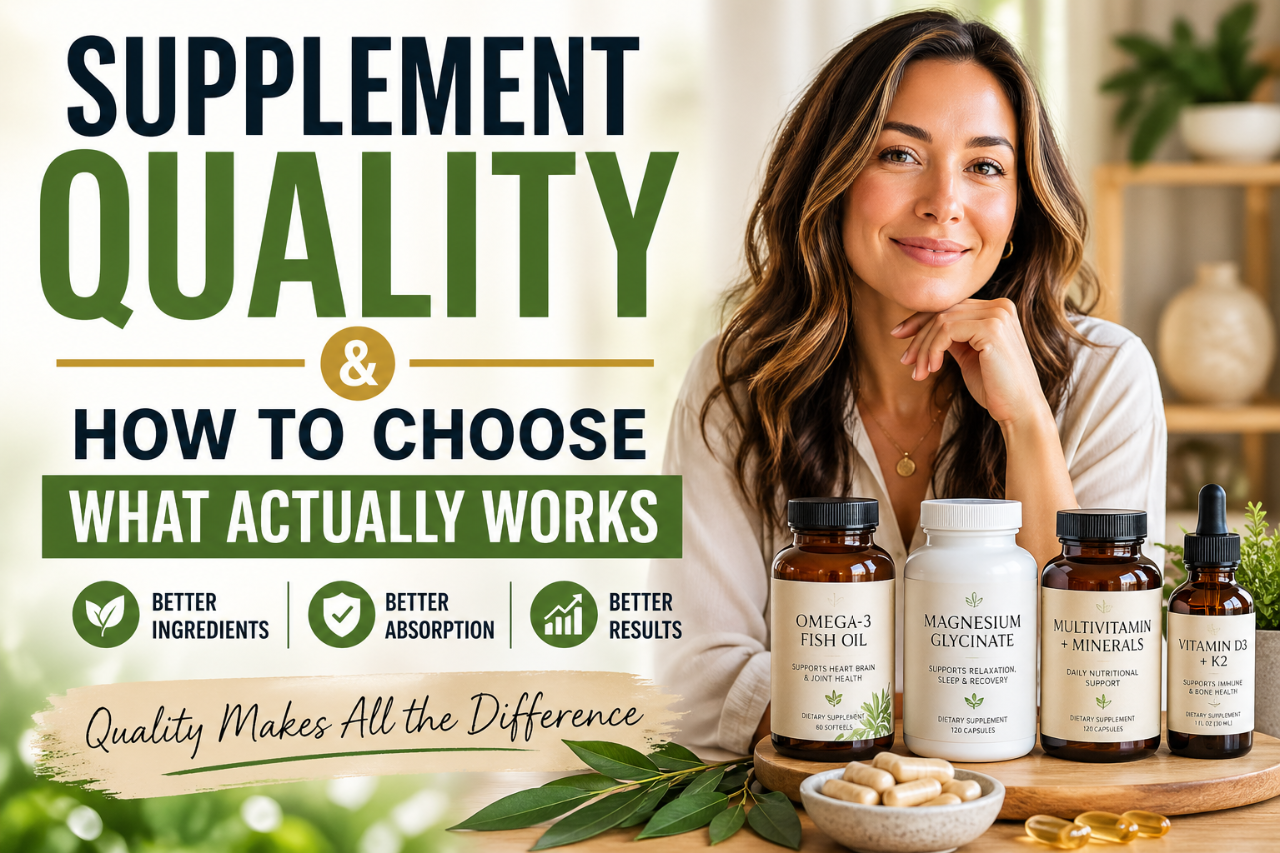
Walk into any grocery store, pharmacy, or online marketplace today and you’ll find thousands of supplements promising better energy, digestion, sleep, hormones, immunity, and longevity.
But here’s the question most people never ask:
Are the supplements you’re taking actually helping your body or simply draining your wallet?
I often work with people that ask me why the supplements they've been using haven't been helpful. So I thought this was an important discussion to have:
Supplement Quality & How to Choose What Actually Works.
And honestly, this conversation is more important now than ever.
The Supplement Industry Has Changed
Many people assume that if a supplement is on a shelf, it must be safe, effective, and high quality.
Unfortunately, that isn’t always true.
The supplement industry has exploded into a multi-billion-dollar business. While there are still many excellent companies committed to healing and integrity, there are also products made with:
- Cheap ingredients
- Artificial fillers and dyes
- Poorly absorbed nutrient forms
- Inadequate testing
- Low-potency ingredients
Some products may not even contain the amount of nutrients listed on the label.
That means two people can take “the same supplement” and have completely different results depending on the quality of the product.
Why Some Supplements Work Better Than Others
One of the biggest factors is something called bioavailability.
Bioavailability simply means:
How much your body can actually absorb and use.
For example:
- One form of magnesium may calm the nervous system and improve sleep
- Another form may barely absorb at all
The same is true for:
- B vitamins
- Omega-3 oils
- Iron
- Curcumin
- Probiotics
- Herbal formulas
High-quality supplements use forms the body recognizes and absorbs more easily.
Lower-quality products often use the cheapest versions possible.
The Hidden Ingredient Problem
Many supplements contain ingredients that aren’t there to help your body.
Common fillers include:
- Artificial colors
- Hydrogenated oils
- Excess binders
- Talc
- Synthetic additives
For sensitive people, these ingredients may actually contribute to:
- Inflammation
- Digestive irritation
- Skin reactions
- Brain fog
- Immune stress
This is especially important for people already dealing with chronic health issues, autoimmune conditions, gut problems, or nervous system overload.
Why Buying Supplements Online Can Be Risky
Many people purchase supplements from large online marketplaces like Amazon because it’s convenient.
But convenience doesn’t always equal safety.
One concern is third-party reselling.
Sometimes supplements sold online may:
- Be improperly stored
- Be expired
- Be diluted or tampered with
- Come from unauthorized sellers
Even when packaging looks legitimate, quality isn’t always guaranteed.
That doesn’t mean every online supplement is bad, but it does mean consumers need to become more informed and intentional.
Bigger Isn’t Always Better
Another important topic is how many once-independent supplement companies are now owned by massive corporations.
When large corporations take over wellness brands, priorities can sometimes shift toward:
- Mass production
- Lower manufacturing costs
- Higher profit margins
Instead of focusing on:
- Ingredient purity
- Practitioner-level effectiveness
- Clinical quality
Again, not every corporate-owned brand is poor quality, but ownership changes can affect formulation standards over time.
What to Look For in a Quality Supplement
Here are some practical ways to choose better supplements:
1. Look for Transparency
Good companies openly share:
- Ingredient sourcing
- Manufacturing standards
- Third-party testing
- Clinical research
2. Read the Ingredient List Carefully
Shorter ingredient lists are often better.
Watch for:
- Artificial dyes
- Unnecessary fillers
- Excess sugars
- Cheap synthetic additives
3. Learn the Active Forms
Certain nutrient forms absorb much better than others.
Examples:
- Magnesium glycinate instead of magnesium oxide
- Methylfolate instead of folic acid
- Methylcobalamin instead of cyanocobalamin
These forms tend to be gentler and more usable for the body.
4. Buy from Trusted Sources
Whenever possible:
- Buy directly from the company
- Use trusted practitioner dispensaries
- Choose reputable health stores
5. Focus on Quality Over Quantity
Many people take 15–20 supplements but still feel unwell.
Often, a smaller protocol using:
- High-quality products
- Proper dosages
- Personalized support
Works far better than taking many random supplements.
6. Supplement Brands that I Recommend often are:
The Foundation Matters Most
Before chasing complicated protocols, I emphasize building a strong foundation first.
For many people, the basics include:
- Nervous system and hormone support
- Digestive health
- Blood sugar balance
- Mineral replenishment
- Sleep support
- Hydration
- Anti-inflammatory nutrition
Supplements work best when paired with:
- Healthy lifestyle habits
- Stress reduction
- Proper sleep
- Emotional healing
- Movement and circulation
Healing is never just about pills.
A Simple Foundational Wellness Protocol
Here’s a general wellness approach many people benefit from discussing with a qualified practitioner:
- Nervous System Support
- Magnesium glycinate
- Breathwork
- Gentle movement
- Consistent sleep schedule
- Gut & Digestion Support
- Digestive enzymes
- Probiotics
- Whole foods
- Reduced processed foods
- Anti-Inflammatory Support
- Omega-3 fatty acids
- Colorful vegetables
- Reduced sugar intake
- Walking outdoors
- Stress & Recovery
- Meditation or prayer
- Nature time
- Journaling
- Limiting overstimulation
Common Questions
“Are expensive supplements always better?”
Not necessarily, but extremely cheap supplements often cut corners.
Quality ingredients, testing, and proper manufacturing do cost more.
“Why don’t I feel better even though I take supplements?”
Possible reasons include:
- Poor absorption
- Wrong supplement for your body
- Low-quality ingredients
- Nervous system overload
- Digestive dysfunction
“Should everyone take the same supplements?”
No. Each person’s body, stress load, digestion, genetics, and health history are different. Personalization matters.
“Can low-quality supplements make symptoms worse?”
For some people, yes, especially if they contain additives, contaminants, or forms the body struggles to process.
Final Thoughts
The wellness world can feel overwhelming.
There’s always a new trend, miracle ingredient, or social media recommendation promising transformation.
But true healing usually comes back to a few simple principles:
✅ Quality matters
✅ Consistency matters
✅ Personalization matters
✅ Foundations matter most
When you begin supporting the body with cleaner, more absorbable, and more intentional products, many people notice improvements in:
- Energy
- Digestion
- Sleep
- Mental clarity
- Inflammation
- Overall resilience
Your body is constantly communicating with you.
The goal is not to overwhelm it with more products, but to support it wisely.
Click here to find out the supplements brands that I typically recommend in my client's protocol.
|