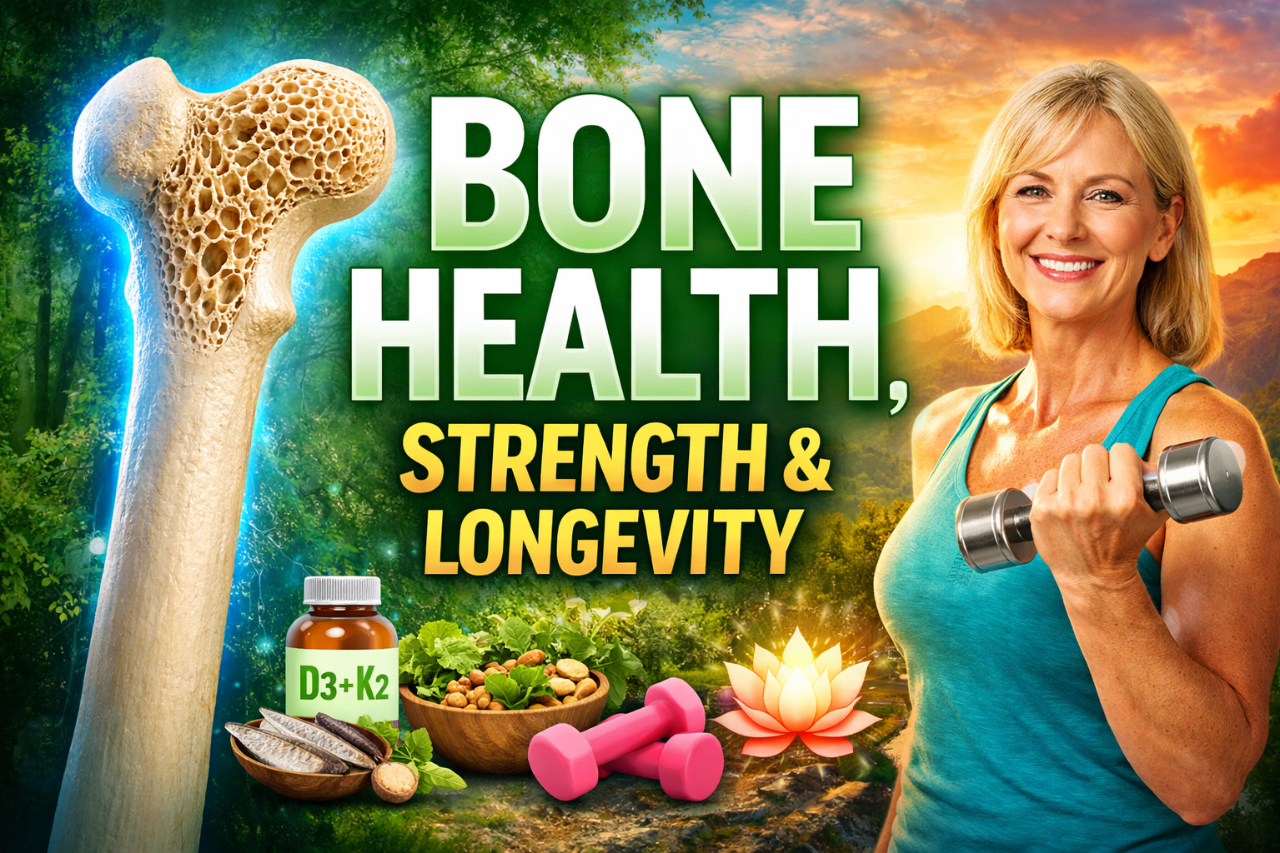
The Real Key to Strong Bones at Any Age
When most people think about bone health, they think of one thing: Calcium
But here’s the truth…
Strong bones are not built from calcium alone.
Bone health is a whole-body process influenced by your digestion, hormones, lifestyle, stress levels, and even your emotional well-being.
If you’ve been told your bones are weakening or you simply want to stay strong and active as you age this deeper understanding can change everything.
Bone Is Living Tissue
Your bones are not static. They are constantly renewing through two key processes:
- Bone breakdown (resorption)
- Bone rebuilding (formation)
When these processes are balanced, your bones stay strong.
But when breakdown outpaces rebuilding…
- Bone density decreases
- Risk of fractures increases
- Osteopenia or osteoporosis can develop
Why Bone Loss Happens (It’s Not Just Calcium)
There are several root causes that often get overlooked:
1. Poor Nutrient Absorption
Even if you’re eating well, your body may not be absorbing minerals effectively due to:
- Low stomach acid
- Digestive issues
- Gut imbalances
2. Hormonal Imbalances
Hormones play a major role in bone health:
- Estrogen and testosterone help maintain bone density
- High cortisol (stress hormone) breaks down bone
- Thyroid imbalance can accelerate bone loss
3. Chronic Inflammation
Inflammation in the body can quietly weaken bones over time and is often linked to:
- Poor diet
- Environmental toxins
- Stress
4. Missing Key Nutrients
Bone health requires more than calcium. Critical nutrients include:
- Magnesium
- Vitamin D
- Vitamin K2
- Trace minerals like boron, zinc, and silica
5. Lack of Movement
Bones need resistance and load to stay strong. Without it:
- Bone density decreases over time
6. Chronic Stress
Long-term stress increases cortisol, which:
- Breaks down bone tissue
- Reduces the body’s ability to rebuild
A Whole-Person Approach to Strong Bones
Instead of focusing on one nutrient, the goal is to support your entire system.
Here’s how:
1. Nourish Your Body with Mineral-Rich Foods
 Focus on: Focus on:
- Leafy greens (kale, spinach, arugula)
- Sardines and wild fish
- Bone broth
- Nuts and seeds (especially sesame and almonds)
- Eggs
- Root vegetables
- Sea vegetables for trace minerals
Limit:
- Processed foods
- Excess sugar
- Soda
- Too much caffeine
- Alcohol
2. Support with Targeted Nutrients
A strong foundation includes:
- Magnesium → supports bone structure and relaxation
- Vitamin D3 → helps absorb calcium
- Vitamin K2 → directs calcium into bones (not arteries)
- Trace minerals → build the bone matrix
- Collagen → supports bone strength and flexibility
3. Move Your Body (This Is Critical)
 Exercise is one of the most powerful tools for bone health. Exercise is one of the most powerful tools for bone health.
Focus on:
- Strength training (2–3x per week)
- Walking (especially hills)
- Resistance bands
- Bodyweight exercises
Bones respond to stress by becoming stronger.
4. Calm the Nervous System
 Your body cannot rebuild effectively when it’s stuck in stress mode. Your body cannot rebuild effectively when it’s stuck in stress mode.
Daily support can include:
- Deep breathing
- Meditation & Prayer
- Time in nature
- Gentle stretching or yoga
5. Improve Digestion & Absorption
If your body can’t absorb nutrients, it can’t build strong bones.
Simple ways to support digestion:
- Eat slowly and chew well
- Consider digestive enzymes
- Use apple cider vinegar before meals
- Address gut imbalances if needed
6. Support Emotional & Energetic Balance
Bone health is often connected to deeper themes like:
- Feeling unsupported
- Fear of aging
- Lack of stability
Practices that can help:
- Grounding (walking barefoot outside)
- Journaling
- Root chakra support
- Releasing long-term stress patterns
❓ Frequently Asked Questions
Is osteoporosis just a calcium deficiency?
No. It’s usually a combination of poor absorption, hormonal imbalance, inflammation, and lifestyle factors.
Should I take calcium supplements?
Not always. It’s more important that your body can properly absorb and use calcium, which requires magnesium, vitamin D, and K2.
What’s the most important nutrient for bones?
There isn’t just one. Bone health depends on a combination of nutrients working together.
Can exercise improve bone density?
Yes, this is one of the most effective ways to strengthen bones naturally.
How does stress affect bone health?
Chronic stress raises cortisol, which contributes to bone breakdown.
What’s one simple step I can start today?
Go for a daily walk and increase mineral-rich foods
This alone can begin improving bone health.
Final Thoughts
Bone health isn’t about taking more calcium…
It’s about creating a body that can:
- Absorb nutrients
- Balance hormones
- Reduce inflammation
- Build strength naturally
When you support the whole system, your bones follow.
 If you need help figuring out why your bone health may be weak connect with me for a Medical Intuitive Reading. If you need help figuring out why your bone health may be weak connect with me for a Medical Intuitive Reading.
Discover the root cause and the specific health protocol for your body.
Click here for a Medical Intuitive Reading!
|