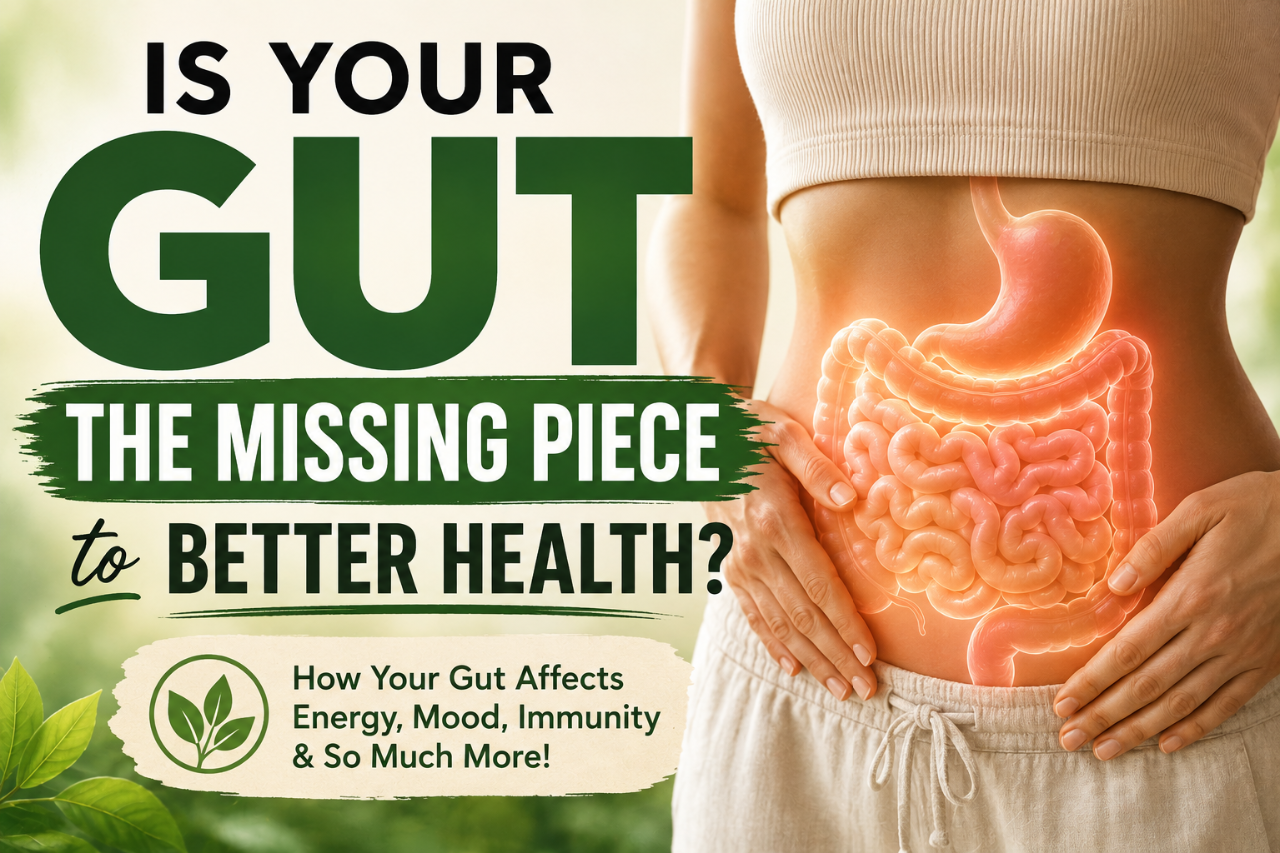
Why Improving Your Digestion Can Affect Much More Than Your Stomach
When most people think about digestive problems, they think about symptoms like bloating, gas, constipation, diarrhea, heartburn or stomach pain.
But what if your digestive system could also be connected to how energetic you feel, how clearly you think, how your immune system functions, and even how you respond to stress?
After more than 18 years of working with clients, digestive health has consistently been one of the most common areas where I see people struggling.
And many of these people didn't originally come to me because of their digestion.
They came because they were tired.
They had brain fog.
They didn't feel like themselves.
They were struggling with inflammation, skin problems, food sensitivities, hormonal concerns or anxiety.
That's why I recently dedicated an entire Gut Reset Workshop to one important message:
Your digestive system is connected to much more than your stomach.
Let's look at why.
Your Digestive System Is More Than a Food Processor
Digestion is an incredibly coordinated process.
It involves your:
- Brain and nervous system
- Mouth
- Stomach
- Pancreas
- Liver
- Gallbladder
- Small intestine
- Large intestine
- Gut microbiome
Each has a job to do.
Food has to be broken down properly.
Stomach acid participates in protein digestion and other digestive processes.
Your pancreas releases digestive enzymes.
Your liver produces bile, which helps with fat digestion and absorption.
Your small intestine absorbs much of the nutrition from your food.
Your intestinal lining helps maintain an important barrier between the contents of your digestive tract and the rest of your body.
And throughout your digestive system lives an enormous ecosystem of microorganisms collectively known as your gut microbiome.
When we look at digestion from a functional medicine perspective, we're not simply asking:
"How do we stop the bloating?"
We're asking:
"Why is the bloating happening in the first place?"
That's a very different question.
Eating Healthy Isn't Enough, You Have to Digest It
Someone can eat an incredible diet filled with vegetables, quality proteins, healthy fats and nutrient-rich foods...
But eating nutrients isn't the same as absorbing and using them.
Think of the process like this:
FOOD → BREAK DOWN → ABSORB → TRANSPORT → USE
Your body has to successfully complete that process.
Vitamins, minerals, amino acids, fatty acids and other nutrients are needed throughout the body.
They're involved in energy production, nervous-system function, immune function and countless cellular processes.
That's one reason digestive problems and fatigue can sometimes appear together.
It doesn't mean everyone's fatigue comes from their gut.
But if someone is experiencing persistent fatigue alongside bloating, diarrhea, constipation, food reactions or other digestive problems, digestion and nutrient status may be worth investigating.
Your Microbiome Is Like a Garden
One of the most fascinating areas of digestive health is the microbiome.
Your digestive tract contains a huge community of microorganisms.
Rather than thinking about bacteria as automatically being "bad," imagine your microbiome as a garden.
A healthy garden has diversity.
Different organisms coexist and contribute to the ecosystem.
The foods you eat help influence that environment.
Certain intestinal bacteria ferment dietary fibers and produce compounds such as short-chain fatty acids that interact with the intestinal environment.
That's one reason I encourage people who tolerate them to eat a diverse range of whole plant foods.
Think:
 Color. Variety. Diversity. Color. Variety. Diversity.
Vegetables.
Fruit.
Herbs and spices.
Nuts and seeds.
Legumes when tolerated.
Fiber-rich foods.
Polyphenol-rich foods.
But here's something important:
More isn't always better.
Someone with significant IBS, SIBO or bloating may not feel better by suddenly doubling their fiber or eating huge amounts of fermented food.
That's why individualized care matters.
The healthiest food in the world isn't particularly helpful if your body currently doesn't tolerate it.
Your Gut and Immune System Are Closely Connected
Your intestinal lining isn't simply a tube that food travels through.
It's an important barrier.
We want nutrients to cross appropriately while maintaining protection from substances that shouldn't freely enter circulation.
When intestinal barrier function becomes disrupted, interactions between the intestinal environment and immune system can change.
This is sometimes discussed under the popular term "leaky gut."
It's important not to blame every chronic health condition on leaky gut.
Human health is much more complicated than that.
But intestinal barrier health, the microbiome, immune signaling and inflammation are interconnected, which is why digestive health can be an important part of a whole-person approach.
Why Your Gut Can Affect How You Feel
This is where things become particularly interesting.
Your digestive system interacts with many other systems.
Energy
Digesting and absorbing nutrients helps provide the raw materials your cells need to function and produce energy.
Immune Health
Your intestinal barrier, microbiome and immune system constantly communicate with one another.
Hormones and Metabolism
Nutrition, the microbiome, liver metabolism, blood sugar and digestive health all interact with metabolic and hormonal processes.
Skin
Researchers continue to investigate what's sometimes called the gut-skin axis, the relationship between intestinal health, the microbiome, immune function and skin.
Brain and Mood
Perhaps one of the most fascinating connections is between your gut and your brain.
Your Gut and Brain Are Constantly Talking
Have you ever been nervous and suddenly needed to use the bathroom?
Lost your appetite before an important event?
Experienced "butterflies" in your stomach?
Felt nauseous when extremely stressed?
That's not imaginary.
Your brain and digestive system are communicating.
This relationship is known as the gut-brain axis.
And one of the important communication pathways involved is the vagus nerve.
The Vagus Nerve and "Rest & Digest"
The vagus nerve is an important component of the parasympathetic nervous system.
You've probably heard this referred to as:
REST & DIGEST.
Compare that with the sympathetic nervous system:
FIGHT OR FLIGHT.
Imagine being chased by a bear.
Your body isn't thinking:
"Let's beautifully digest lunch."
Your body is preparing you to survive.
The problem is that today's "bear" often isn't an animal.
It's:
Stress.
Deadlines.
Financial worries.
Relationship difficulties.
Poor sleep.
Constant notifications.
Fear.
Trauma.
Or never allowing ourselves to truly stop.
When stress becomes chronic, it can influence gastrointestinal motility, sensitivity and digestive function.
That's why addressing digestive health sometimes requires addressing the nervous system too.
Signs Your Gut-Brain Connection May Need Support
Stress and altered digestive function can occur alongside symptoms such as:
- Bloating
- Gas
- Reflux
- Nausea
- Constipation
- Diarrhea
- Abdominal discomfort
- Changes in appetite
- Digestive symptoms that worsen with stress
Some people simultaneously experience:
- Anxiety
- Poor sleep
- Brain fog
- Fatigue
- Feeling "wired but tired"
These symptoms don't prove someone has vagus-nerve damage.
But they can remind us that the digestive and nervous systems shouldn't always be treated as completely separate problems.
IBS Is More Than "Just a Sensitive Stomach"
IBS or Irritable Bowel Syndrome is considered a disorder of gut-brain interaction.
People with IBS may experience very real:
- Abdominal pain
- Bloating
- Constipation
- Diarrhea
- Changes in bowel habits
Sometimes structural testing doesn't reveal an obvious explanation for the severity of the symptoms.
That does not mean the symptoms are "all in someone's head."
The way the nervous system and digestive tract communicate can itself be part of the physiology.
That's one reason nervous-system regulation and stress management can be useful components of an overall IBS strategy for some people.
Why Does SIBO Sometimes Keep Coming Back?
This was one of the most important concepts I discussed during the Gut Reset Workshop.
Someone develops SIBO—Small Intestinal Bacterial Overgrowth.
They receive treatment.
They feel better.
Then months later...
The symptoms return.
So they treat it again.
And sometimes the cycle repeats.
At some point, functional medicine encourages us to ask a different question:
Why does it keep returning?
Treatment may reduce bacterial overgrowth without necessarily correcting the factor that allowed it to develop.
One factor that can be important is intestinal motility.
Your Small Intestine Has a Cleaning Crew
Between meals, your small intestine has waves of contractions known as the Migrating Motor Complex, or MMC.
Think of it like the cleaning crew that arrives after a restaurant closes.
It helps move residual material through the small intestine between meals.
For some people, impaired motility can be one factor associated with recurrent SIBO.
Previous gastrointestinal infections, certain medications, diabetes, hypothyroidism, anatomical changes and other gastrointestinal conditions can also contribute.
This is why repeatedly trying to "kill bad bacteria" isn't always enough.
Sometimes we need to ask:
What created the environment that allowed the problem to happen?
One of the Biggest Gut-Healing Mistakes
One of the biggest mistakes people make is treating every digestive problem exactly the same.
Someone hears probiotics are healthy.
So they start taking probiotics.
Then they hear fiber is important.
They dramatically increase fiber.
Then someone recommends fermented foods.
Then digestive enzymes.
Then a cleanse.
Then they eliminate gluten.
Then dairy.
Then eggs.
Then corn.
Before long they're taking 15 supplements and eating seven foods...
and they're still bloated.
The functional medicine approach should be different.
Instead of asking:
"What else can I take?"
Ask:
"What is driving MY digestive problem?"
And then:
"What should I address first?"
That's where healing becomes much more individualized.
7 Simple Ways to Start Supporting Your Gut Today
You don't need to overhaul your entire life tomorrow.
Start with foundations.
1. Relax Before Eating
Put your phone away.
Take several slow breaths.
Say grace or give thanks for your meal.
Give yourself a few moments to transition from stress into eating.
Help tell your body:
"We're safe. It's time to digest."
2. Chew Thoroughly
Slow down.
Digestion begins in your mouth.
Your stomach doesn't have teeth!
3. Eat Mostly Whole Foods
Build your meals around quality protein, colorful vegetables and fruit, healthy fats, herbs, spices, nuts and seeds as tolerated.
You don't need perfection.
Improve the ratio.
4. Nourish Your Microbiome
Eat a variety of plant foods and fibers that you tolerate rather than eating the same foods every day.
Think:
Eat the rainbow.
5. Move After Meals
Even a short walk after eating can support metabolic health and normal digestive movement.
6. Consider Whether You're Constantly Grazing
For appropriate individuals, leaving reasonable periods between meals can allow normal fasting digestive patterns including the migrating motor complex to occur.
This doesn't mean everyone needs to fast.
Individual health needs matter.
7. Support Your Nervous System
Don't underestimate:
Sleep.
Walking.
Prayer.
Slow breathing.
Nature.
Healthy relationships.
Stress management.
Sometimes helping your digestive system isn't about taking another supplement.
Sometimes it's about helping your body spend more time in:
REST & DIGEST.
Stop Guessing and Start Understanding Your Gut
If there's one message I hope you take away, it's this:
Your digestive system isn't separate from the rest of you.
Your gut interacts with your:
- Brain.
- Immune system.
- Metabolism.
- Nervous system.
- Nutrient status.
- Energy.
And your lifestyle influences all of them.
But there isn't one universal "gut protocol" that works for everyone.
That's why the goal shouldn't be to chase every symptom with another supplement.
The goal is to understand what's happening in your body, establish the foundations and determine the appropriate next steps.
And that's exactly what we're going to help people do in our new program.
Ready to Take the Next Step?
Join Our 3-Week Digestive Reset
If you've been struggling with digestive problems or today's information has made you realize your gut may need more support I'd love to help you put these principles into practice.
I have created the 3-Week Digestive Reset to take you beyond information and give you a practical, step-by-step approach to improving your digestive health.
WEEK 1 — REMOVE & RESET
We'll help you identify common digestive irritants, simplify your meals, reduce digestive stress and begin creating a healthier foundation.
WEEK 2 — REBUILD & NOURISH
We'll go deeper into stomach acid, digestive enzymes, bile, fiber, prebiotics, probiotics and supporting a healthier microbiome.
WEEK 3 — REPAIR & MAINTAIN
We'll focus on intestinal health, inflammation, the nervous system, sleep, movement, food reintroduction and creating habits you can maintain long-term.
You'll receive:
✓ 3 Video Training Sessions
✓ Digestive Reset Workbook
✓ Q&A and Guidance
✓ Meal Ideas & Recipes
✓ Nervous System Reset Toolkit
✓ Bio-Resonance Scan
✓ Tools You Can Continue Using After the Program Ends
Rather than searching the internet and wondering:
- "Should I take probiotics?"
- "Should I eliminate gluten?"
- "Do I need digestive enzymes?"
- "Should I increase fiber?"
- "What about SIBO?"
...I'll help you understand the foundations and put the pieces together in a logical way.
Your Gut Reset Starts Here
LEARN → RESET → REBUILD → REPAIR → MAINTAIN
If you're ready to stop guessing and start taking practical steps toward better digestive health, we'd love to have you join me.
Learn More & Enroll in the 3-Week Digestive Reset Here
Your digestive system affects so much more than your stomach.
This may be the perfect time to finally give your gut the attention it deserves.
|