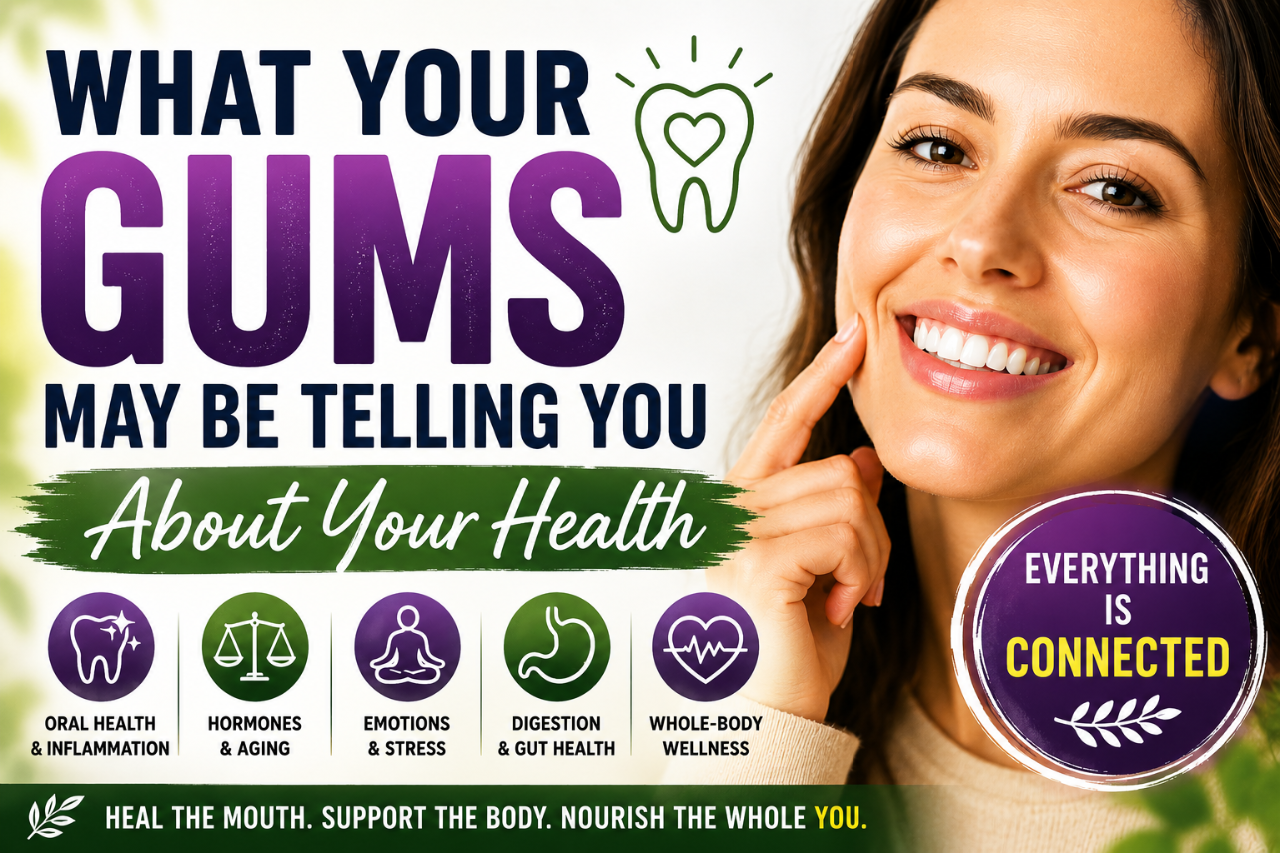
The Hidden Connection Between Your Mouth and the Rest of Your Body
When most people think about gum health, they think about cavities, flossing, or visits to the dentist. But what if your gums were actually providing clues about what's happening throughout your entire body?
During our recent Healing Hour, we explored the fascinating connection between oral health, hormones, emotions, digestion, inflammation, and overall wellness. What became clear is that the mouth is not separate from the body, it is a reflection of it.
Many chronic health conditions can leave clues in the mouth long before they show up elsewhere.
Why Gum Health Matters
Your gums are living tissue with a rich blood supply. When they become inflamed, swollen, tender, or prone to bleeding, it may indicate more than just a need to brush and floss.
Research has linked chronic gum disease with:
- Heart disease
- Diabetes
- Chronic inflammation
- Autoimmune conditions
- Cognitive decline
- Digestive dysfunction
- Hormonal imbalances
The mouth is one of the primary entry points into the body. When bacteria and inflammation are present in the gums, they can affect many other systems.
Healthy gums are not just about having a beautiful smile, they are part of building a healthy body.
The Hormone Connection
One of the most overlooked influences on gum health is hormones.
As estrogen, progesterone, and testosterone levels change throughout life, the tissues that support the gums and teeth can become more vulnerable.
Women often notice changes in gum sensitivity during:
- Pregnancy
- Perimenopause
- Menopause
Men may also experience increased gum problems when testosterone declines.
Signs that hormones may be affecting oral health include:
- Receding gums
- Increased tooth sensitivity
- Bleeding gums
- Dry mouth
- Slow healing after dental procedures
Supporting hormone balance through proper nutrition, stress management, sleep, and individualized healthcare can often improve oral health outcomes.
What Chinese Medicine Says About Teeth
Traditional Chinese Medicine has long viewed the mouth as a reflection of the body's internal balance.
In Chinese Medicine, each tooth is connected energetically to organ systems through meridian pathways.
For example:
- Front teeth are associated with Kidney and Bladder energy
- Canines relate to Liver and Gallbladder function
- Premolars connect to Lung and Large Intestine energy
- Molars are associated with the Stomach, Spleen, and Pancreas
This doesn't mean a tooth problem causes disease in an organ, but it can provide valuable clues about areas of imbalance that may need support.
The Emotional Side of Gum Health
Stress doesn't just affect your mood, it affects your biology.
Chronic stress can:
- Increase inflammation
- Suppress immune function
- Slow healing
- Contribute to teeth grinding
- Impact digestion
- Affect hormone production
Chinese Medicine also associates emotions with specific organ systems:
- Fear affects the Kidneys
- Anger affects the Liver
- Grief affects the Lungs
- Worry affects the Spleen
Over time, unresolved emotional stress may contribute to physical symptoms throughout the body, including the mouth.
Two Powerful Questions to Ask Yourself About Your Gum Health
1. If my gums could speak, what might they be trying to tell me about my overall health?
Bleeding gums, inflammation, recession, and sensitivity are often signals rather than random events. Consider whether your body may be asking for support in areas such as nutrition, hormones, stress management, sleep, digestion, or emotional healing.
2. What daily habits are either strengthening or weakening my oral health?
Small habits create big results over time. Ask yourself:
- Am I eating foods that support healthy tissues?
- Am I managing stress effectively?
- Do I stay hydrated?
- Am I getting enough sleep?
- Do I prioritize oral hygiene consistently?
The answers may reveal opportunities for healing that extend far beyond your mouth.
A Whole-Person Approach to Healthy Gums
Healthy gums require more than toothpaste.
Consider supporting your oral health through:
Nutrition
- Reduce excess sugar
- Increase vegetables and antioxidant-rich foods
- Include healthy fats
- Support blood sugar balance
Lifestyle
- Prioritize quality sleep
- Exercise regularly
- Stay hydrated
- Manage stress
Emotional Health
- Journal regularly
- Practice forgiveness
- Spend time in prayer or meditation
- Address unresolved emotional burdens
Oral Care
- Brush twice daily
- Floss consistently
- Consider tongue scraping
- Explore oil pulling
- Schedule regular dental cleanings
Final Thoughts
Your gums are more than tissue around your teeth. They are part of a complex system that reflects your overall health.
When we stop viewing symptoms in isolation and begin listening to the body's messages, we often uncover deeper opportunities for healing.
Whether you're dealing with gum sensitivity, bleeding, recession, or simply wanting to optimize your health, remember that true wellness comes from supporting the whole person: body, mind, and spirit.
Sometimes the path to better health begins with a simple question:
"What is my body trying to tell me?"
|