Aging Gracefully: Longevity, Strength, and Creating a Healthier Future
Monday, June 8, 2026
Most people think aging is something that simply happens to us.
But what if aging is something we can influence every single day?
While we cannot stop the passing of time, we can dramatically impact how we age, how we feel, and the quality of life we experience in our later years.
The goal isn't just to live longer. The goal is to remain vibrant, energetic, independent, mentally sharp, and physically strong for as many years as possible.
I invite you to explore some of the most powerful ways to support healthy aging naturally. The exciting news is that many of the same habits that promote longevity also improve your energy, mood, immune system, and overall wellness today.
What Really Causes Us to Age?
While genetics play a role, research continues to show that lifestyle choices have a much greater impact on our long-term health than many people realize.
Some of the biggest contributors to accelerated aging include:
Chronic Inflammation
Inflammation is at the root of many chronic health conditions including heart disease, arthritis, diabetes, cognitive decline, and autoimmune conditions.
Common causes include:
Processed foods
Excess sugar
Chronic stress
Poor sleep
Gut dysfunction
Hidden infections
Environmental toxins
Reducing inflammation is one of the most important things you can do for your future health.
Mitochondrial Dysfunction
Your mitochondria are often called the "powerhouses" of your cells because they produce energy.
As we age, mitochondrial function naturally declines, which can contribute to:
Fatigue
Brain fog
Slower recovery
Reduced resilience
Accelerated aging
Supporting mitochondrial health can improve energy production and cellular repair.
Hormonal Changes
Hormones influence nearly every aspect of health, including:
Metabolism
Muscle mass
Sleep
Mood
Cognitive function
Energy
As hormone levels change with age, supporting the body's natural balance becomes increasingly important.
Toxic Load
Every day we are exposed to:
Heavy metals
Chemicals
Plastics
Mold toxins
Environmental pollutants
Over time these exposures can place a significant burden on detoxification pathways and contribute to inflammation and chronic disease.
The #1 Longevity Strategy Most People Ignore
If there is one thing that consistently appears in longevity research, it is the importance of maintaining muscle mass.
Muscle is much more than strength.
Healthy muscle helps:
Stabilize blood sugar
Improve metabolism
Protect against falls and injury
Support healthy hormone balance
Increase resilience during illness
Maintain independence as we age
One of the greatest predictors of longevity is not your weight, it is your strength.
Simple Goal
Aim for strength training at least two to three times per week.
This could include:
Resistance bands
Bodyweight exercises
Weight machines
Free weights
Swimming
Water fitness classes
The key is consistency, not perfection.
Protein Becomes More Important As We Age
Many people, especially women, are not consuming enough protein to maintain muscle and support healthy aging.
Protein provides the building blocks needed for:
Muscle repair
Hormone production
Immune function
Brain health
Healthy metabolism
Try including quality protein at every meal.
Excellent options include:
Eggs
Fish
Poultry
Grass-fed beef
Greek yogurt
Cottage cheese
Protein shakes
When choosing a protein powder, look for:
Whey isolate
Organic ingredients
GMO-free products
Minimal fillers
Stress Is Aging More People Than Time
Many people underestimate the impact stress has on their health.
Chronic stress can contribute to:
Elevated cortisol
Blood sugar imbalance
High blood pressure
Weight gain
Poor sleep
Hormonal disruption
Immune suppression
The good news is that our bodies are remarkably resilient when given the right support.
Daily stress-reduction practices can have profound effects on long-term health.
Some simple options include:
Prayer
Meditation
Exercise
Deep breathing
Nature walks
Gratitude journaling
Energy healing
Spending time with loved ones
Even 10 minutes a day can make a significant difference.
Adaptogens: Nature's Stress Support
Adaptogenic herbs have been used for centuries to help the body adapt to stress.
Some popular adaptogens include:
Ashwagandha
Rhodiola
Holy Basil
Ginseng
Reishi
Cordyceps
Rhodiola
These herbs may help support healthy cortisol balance, improve resilience, and enhance overall well-being.
Consult a qualified practitioner before beginning new supplements.
The Surprising Benefits of Cold Exposure
While it may not sound appealing at first, cold exposure has become a popular longevity practice.
Potential benefits include:
Improved circulation
Better recovery
Increased resilience
Enhanced metabolic flexibility
Nervous system regulation
You don't need to jump into an ice bath.
Simply finishing your shower with 30–60 seconds of cold water can be a great place to start.
Don't Forget the Spiritual Side of Healing
Healing isn't only physical. Life's challenges often bring opportunities for growth, deeper awareness, and transformation.
While we may not always understand why difficult experiences happen, we can choose how we respond to them.
Faith, gratitude, purpose, and connection can become powerful healing forces.
Sometimes true longevity isn't just about adding years to our life, it's about adding life to our years.
Small Habits Create Big Results
Many people believe they need a complicated health plan to improve their future.
In reality, healthy aging is often built through small, consistent actions.
This week, choose just three:
✓ Eat more protein
✓ Strength train twice
✓ Walk daily
✓ Improve your sleep
✓ Practice gratitude
✓ Spend time in nature
✓ Reduce processed foods
✓ End your shower with cold water
✓ Make time for prayer or meditation
Small habits, practiced consistently, create extraordinary results over time.
Your future health is being shaped by the choices you make today.
Choose wisely. Your future self will thank you.
Which area of healthy aging do you feel needs the most attention right now: nutrition, exercise, stress management, sleep, or mindset?
Supplement Quality: Why What You Take Matters More Than You Think
Tuesday, May 26, 2026
Walk into any grocery store, pharmacy, or online marketplace today and you’ll find thousands of supplements promising better energy, digestion, sleep, hormones, immunity, and longevity.
But here’s the question most people never ask:
Are the supplements you’re taking actually helping your body or simply draining your wallet?
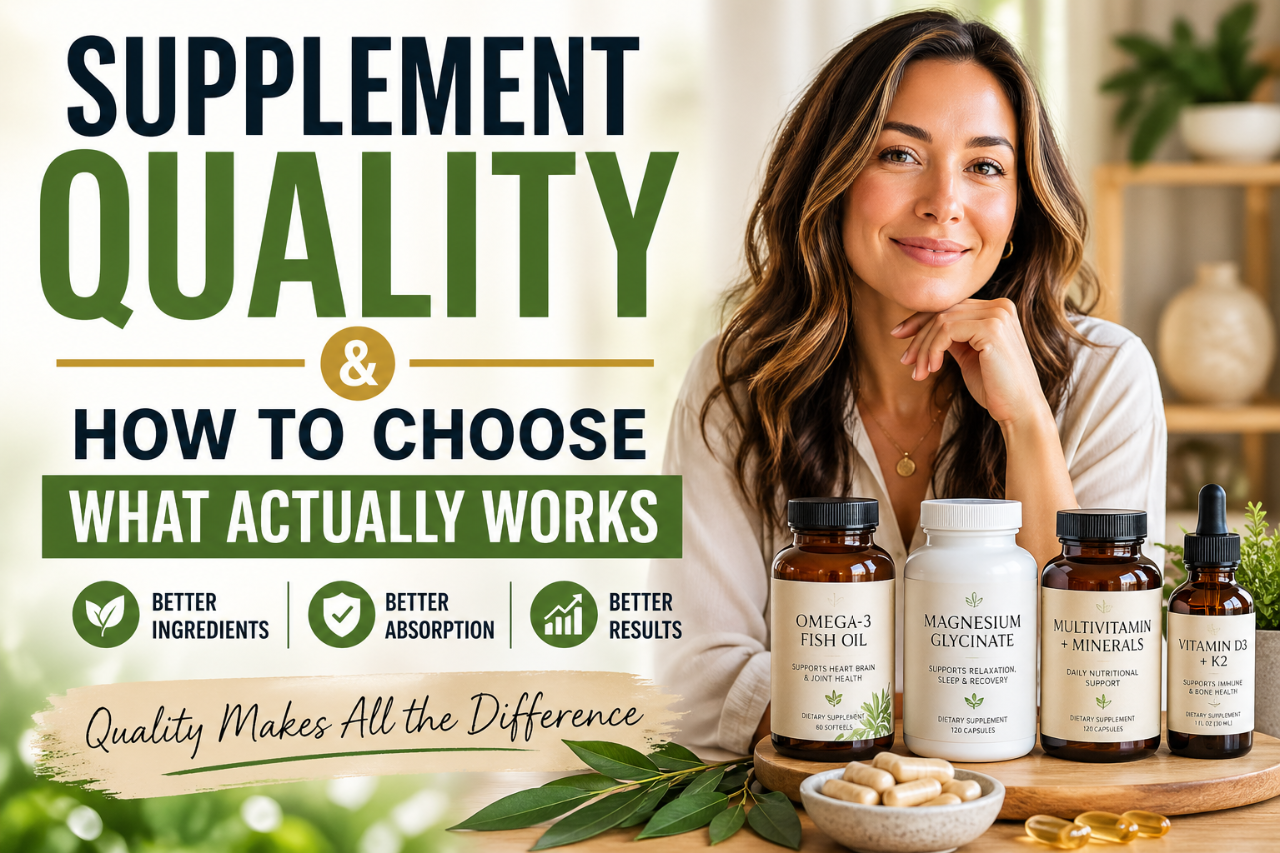
I often work with people that ask me why the supplements they've been using haven't been helpful. So I thought this was an important discussion to have: Supplement Quality & How to Choose What Actually Works.
And honestly, this conversation is more important now than ever.
The Supplement Industry Has Changed
Many people assume that if a supplement is on a shelf, it must be safe, effective, and high quality.
Unfortunately, that isn’t always true.
The supplement industry has exploded into a multi-billion-dollar business. While there are still many excellent companies committed to healing and integrity, there are also products made with:
Cheap ingredients
Artificial fillers and dyes
Poorly absorbed nutrient forms
Inadequate testing
Low-potency ingredients
Some products may not even contain the amount of nutrients listed on the label.
That means two people can take “the same supplement” and have completely different results depending on the quality of the product.
Why Some Supplements Work Better Than Others
One of the biggest factors is something called bioavailability.
Bioavailability simply means:
How much your body can actually absorb and use.
For example:
One form of magnesium may calm the nervous system and improve sleep
Another form may barely absorb at all
The same is true for:
B vitamins
Omega-3 oils
Iron
Curcumin
Probiotics
Herbal formulas
High-quality supplements use forms the body recognizes and absorbs more easily.
Lower-quality products often use the cheapest versions possible.
The Hidden Ingredient Problem
Many supplements contain ingredients that aren’t there to help your body.
Common fillers include:
Artificial colors
Hydrogenated oils
Excess binders
Talc
Synthetic additives
For sensitive people, these ingredients may actually contribute to:
Inflammation
Digestive irritation
Skin reactions
Brain fog
Immune stress
This is especially important for people already dealing with chronic health issues, autoimmune conditions, gut problems, or nervous system overload.
Why Buying Supplements Online Can Be Risky
Many people purchase supplements from large online marketplaces like Amazon because it’s convenient.
But convenience doesn’t always equal safety.
One concern is third-party reselling.
Sometimes supplements sold online may:
Be improperly stored
Be expired
Be diluted or tampered with
Come from unauthorized sellers
Even when packaging looks legitimate, quality isn’t always guaranteed.
That doesn’t mean every online supplement is bad, but it does mean consumers need to become more informed and intentional.
Bigger Isn’t Always Better
Another important topic is how many once-independent supplement companies are now owned by massive corporations.
When large corporations take over wellness brands, priorities can sometimes shift toward:
Mass production
Lower manufacturing costs
Higher profit margins
Instead of focusing on:
Ingredient purity
Practitioner-level effectiveness
Clinical quality
Again, not every corporate-owned brand is poor quality, but ownership changes can affect formulation standards over time.
What to Look For in a Quality Supplement
Here are some practical ways to choose better supplements:
1. Look for Transparency
Good companies openly share:
Ingredient sourcing
Manufacturing standards
Third-party testing
Clinical research
2. Read the Ingredient List Carefully
Shorter ingredient lists are often better.
Watch for:
Artificial dyes
Unnecessary fillers
Excess sugars
Cheap synthetic additives
3. Learn the Active Forms
Certain nutrient forms absorb much better than others.
Examples:
Magnesium glycinate instead of magnesium oxide
Methylfolate instead of folic acid
Methylcobalamin instead of cyanocobalamin
These forms tend to be gentler and more usable for the body.
4. Buy from Trusted Sources
Whenever possible:
Buy directly from the company
Use trusted practitioner dispensaries
Choose reputable health stores
5. Focus on Quality Over Quantity
Many people take 15–20 supplements but still feel unwell.
Often, a smaller protocol using:
High-quality products
Proper dosages
Personalized support
Works far better than taking many random supplements.
6. Supplement Brands that I Recommend often are:
Moss Nutrition - Use my practitioner code: D464 to place your order.
Inner Light Mastery: Awaken the Power That’s Already Within You
Monday, May 4, 2026
What if the clarity you’ve been searching for…
The healing your body has been asking for…
And the peace your soul longs for…
Are closer than you think.
Inner Light Mastery is not about becoming someone new.
It’s about remembering who you truly are and learning how to access, strengthen, and live from that inner light every single day.
In a world filled with noise, stress, and external pressure, Inner Light Mastery offers a radically different path: one that leads inward, where real transformation begins.
What Is Inner Light Mastery?
Inner Light Mastery is the practice of consciously reconnecting with your inner source of wisdom, vitality, and divine intelligence. It blends intuitive awareness, energetic alignment, nervous system regulation, and spiritual embodiment into a practical, grounded way of living.
This isn’t about bypassing real-life challenges or forcing positivity.
It’s about building an unshakable inner foundation so you can meet life with clarity, strength, and grace.
At its core, Inner Light Mastery teaches you how to:
Listen to your body’s messages
Trust your intuition with confidence
Release stored emotional and energetic blocks
Align your mind, body, and spirit
Access guidance without fear or confusion
When your inner light is strong, life feels less reactive and more intentional.
Why Your Inner Light Matters More Than Ever
Many people feel:
Disconnected from their intuition
Stuck in chronic stress or fatigue
Emotionally overwhelmed or spiritually confused
Pulled in a hundred directions by external demands
Inner Light Mastery helps you come back home to yourself.
When your inner light is activated:
Decisions become clearer
Your nervous system calms
Your body heals more efficiently
Emotional triggers lose their grip
You feel guided instead of lost
This inner alignment creates ripple effects in every area of life health, relationships, purpose, and peace.
The Core Benefits of Inner Light Mastery
Deep Inner Calm
As you learn to regulate your nervous system and release energetic overload, your body shifts out of survival mode. Stress softens. Sleep improves. Your system remembers how to feel safe.
Intuitive Confidence
Instead of second-guessing yourself, you begin to trust what you sense and know. Your intuition becomes a steady guide not something you doubt or override.
Emotional Freedom
Old patterns, stored grief, fear, and overwhelm gently unwind. You’re no longer ruled by emotional reactions you respond from clarity and compassion.
Mental Clarity & Focus
Brain fog lifts. Decision-making becomes simpler. You stop outsourcing your power and start living from inner knowing.
Whole-Person Healing
When your inner light is activated, healing happens on multiple levels: physical, emotional, energetic, and spiritual. Your body and soul work together instead of against each other.
Inner Light Mastery Is a Skill—Not a Gift for the “Few”
One of the biggest misconceptions is that intuitive clarity or spiritual connection is reserved for special people.
It’s not.
Inner Light Mastery is something you cultivate through awareness, practice, and alignment. Just like strengthening a muscle, your inner light grows brighter the more you learn how to work with it.
You don’t need to escape your life to access it.
You don’t need to be perfect or “high vibe.”
You simply need willingness and the right guidance.
Living From Your Inner Light Changes Everything
When you live from your inner light:
You stop chasing external validation
You feel anchored during uncertainty
You move through challenges with trust
You experience a deeper connection to God, Source, and your true self
You remember that you are supported, guided, and never alone
Inner Light Mastery isn’t about doing more.
It’s about aligning more deeply.
And from that alignment, life begins to flow.
✨ Ready to Go Deeper? ✨
If something in you is resonating as you read this… it’s your inner light calling you forward.
The truth is, reading about this is just the beginning.
Real transformation happens when you’re guided, supported, and shown how to embody it in your daily life.
That’s exactly why I created The Inner Light Mastery Program.
Inside the program, you’ll:
Learn how to quiet the noise and clearly hear your inner guidance
Strengthen your intuition and trust in your inner knowing
Release emotional and energetic blocks that are keeping you stuck
Create a deep sense of calm, clarity, and alignment in your body
Step into a life where you feel guided, supported, and connected every day
You won’t just understand your inner light…
You’ll learn how to live from it.
✨ This is your invitation to step into a new way of beingone rooted in clarity, trust, and deep inner peace.
One of the Root Causes Behind Many Chronic Health Conditions
Inflammation is often misunderstood.
Most people think of inflammation as something obvious, a swollen ankle after a sprain, redness around a cut, or soreness after an injury. That type of inflammation is actually helpful. It’s your body’s natural healing response.
But there is another type of inflammation that often goes unnoticed.
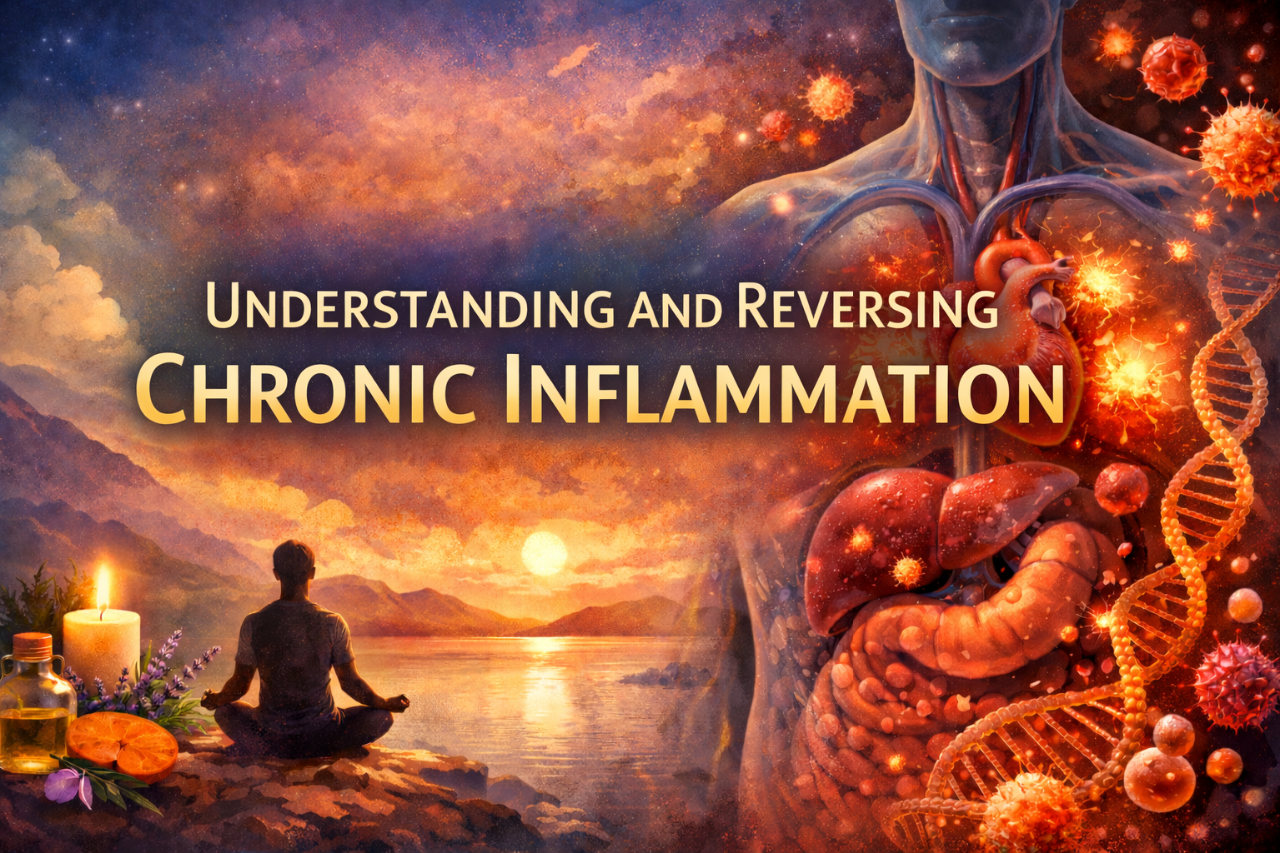
Systemic inflammation is a low-grade, chronic inflammatory response that can quietly affect the entire body for years before symptoms become obvious. Today, researchers and functional medicine practitioners believe this type of inflammation sits at the root of many modern chronic diseases.
Conditions linked to systemic inflammation include:
Chronic fatigue
Brain fog
Hormonal imbalance
Autoimmune disease
Heart disease
Metabolic dysfunction
Chronic pain
Digestive disorders
The important question is not whether inflammation exists, it’s why it stays turned on.
What Is Systemic Inflammation?
Acute inflammation is a short-term response to injury or infection. It helps the body repair tissue and fight off pathogens.
Systemic inflammation is different.
It is:
Low grade
Chronic
Body-wide
Often silent for years
It occurs when the immune system believes there is a constant threat in the body.
That threat might not be an infection. In modern life, it is often something much more subtle.
Common Causes of Chronic Inflammation
Blood Sugar Instability
One of the biggest drivers of inflammation today is unstable blood sugar.
Frequent spikes in blood sugar trigger inflammatory pathways and oxidative stress in the body. Over time this contributes to insulin resistance and metabolic dysfunction.
Common contributors include:
Refined sugar
Ultra-processed foods
High carbohydrate meals without protein
Sweetened beverages
Highly processed grains
Even foods that seem healthy can cause spikes when eaten alone without protein or fat to slow absorption.
Gut Permeability (Leaky Gut)
Your gut is actually the largest immune organ in the body.
When the intestinal lining becomes damaged, tiny particles from food, bacteria, and toxins can leak into the bloodstream. The immune system reacts to these particles as foreign invaders, triggering inflammation.
Factors that contribute to gut permeability include:
Ultra-processed foods
Excess sugar
Seed oils
Alcohol
Antibiotics
Chronic stress
Pesticides and herbicides
Over time, this immune activation can spread beyond the gut and become systemic.
Environmental Toxin Exposure
Modern life exposes us to a variety of environmental toxins that place a burden on the immune system.
Examples include:
Air pollution
Mold exposure
Chemical toxins
Heavy metals
Smoke exposure
When detox pathways become overwhelmed, inflammation increases.
Mitochondrial Stress
Mitochondria are often called the power plants of our cells. They produce the energy our bodies need to function.
When mitochondria become stressed by toxins, infections, nutrient deficiencies, or poor sleep, they produce excessive reactive oxygen species, commonly known as free radicals.
This oxidative stress is a major trigger for inflammatory signaling throughout the body.
Chronic Stress and Poor Sleep
Stress and inflammation are deeply connected.
Chronic stress increases cortisol levels, which can keep inflammatory pathways activated.
Sleep deprivation also reduces the body’s ability to detoxify and repair tissues.
Over time this can contribute to:
Brain fog
Hormone imbalances
Chronic pain
Metabolic dysfunction
Sedentary Lifestyle
Movement plays an important role in regulating inflammation.
A sedentary lifestyle slows circulation, impairs metabolic health, and contributes to immune dysregulation.
Even regular exercise cannot fully offset long periods of inactivity. Consistent daily movement is key.
Signs of Systemic Inflammation
Systemic inflammation can affect many systems in the body.
Brain
Brain fog
Memory issues
Headaches
Anxiety
Depression
Joints and Muscles
Morning stiffness
Chronic pain
Joint inflammation
Muscle tension
Cardiovascular System
High blood pressure
Arterial plaque
Elevated C-Reactive Protein (CRP)
CRP is a blood marker that measures inflammation and can indicate risk for cardiovascular disease.
Metabolic Health
Insulin resistance
Weight gain
Difficulty losing weight
Fatigue after meals
PCOS
Skin
Acne
Rosacea
Eczema
Psoriasis
The skin is often a reflection of what is happening in the gut.
Hormones
PMS
Estrogen dominance
Thyroid dysfunction
Adrenal fatigue
How to Reduce Systemic Inflammation
The goal is not to suppress inflammation with medication alone.
Instead, we want to remove the triggers and support the body’s natural healing processes.
1. Stabilize Blood Sugar
Balancing blood sugar is one of the most powerful ways to reduce inflammation.
Focus on meals that include:
30–40 grams of protein
High-fiber vegetables
Healthy fats such as avocado, olive oil, and fish
Limit:
Refined sugar
Ultra-processed foods
Seed oils (canola, soybean, etc.)
Processed meats
Certain natural compounds such as berberine may help regulate blood sugar spikes when eating higher-carbohydrate meals.
2. Heal the Gut
Restoring gut health can dramatically lower inflammation.
Helpful steps include:
Removing gluten for several weeks
Reducing alcohol
Increasing fermented foods
Foods that support gut healing include:
Bone broth
Collagen
Kefir
Sauerkraut
Miso
Helpful nutrients may include:
L-glutamine
Zinc carnosine
Probiotics
Butyrate
3. Increase Anti-Inflammatory Nutrients
Certain nutrients help reduce inflammatory signaling.
Examples include:
Omega-3 fatty acids
Curcumin (turmeric)
Magnesium
Vitamin D
N-acetyl cysteine (NAC)
These nutrients support immune balance and detox pathways.
4. Improve Sleep and Nervous System Balance
Sleep and nervous system regulation are essential for lowering inflammation.
Helpful habits include:
7–8 hours of sleep per night
Avoiding screens for one hour before bed
Practicing deep breathing
Gentle movement such as walking, Tai Chi, or Qigong
These practices help shift the body out of stress mode and into repair mode.
Final Thoughts
Systemic inflammation is not random.
It is usually a signal that something in the body’s environment or lifestyle is out of balance.
The most effective approach is to:
Stabilize blood sugar
Heal the gut
Reduce toxin exposure
Improve sleep
Support nutrient status
When these foundations are restored, many symptoms begin to improve naturally.
The body has an incredible capacity to heal when the conditions are right.
Want Help Addressing the Root Causes of Your Health Challenges?
If you're dealing with chronic inflammation, fatigue, digestive issues, hormone imbalances, or other persistent health challenges, you don't have to figure it out alone.
Inside the Empowered Health Collective, we help people uncover and address the root causes of chronic illness through a powerful combination of:
Functional medicine education
Medical intuitive insights
Energy healing
Nutrition and detox guidance
Weekly health workshops
Live Q&A sessions
Monthly medical intuitive readings
This community is designed to help you take back control of your health and support your body’s natural healing ability.
✨ Members also receive access to regular Healing Hour sessions, where we dive deeper into topics like systemic inflammation, detoxification, gut health, hormones, and much more.
If you’re ready to move from chronic symptoms to empowered wellness, we invite you to join us for $1.
Choosing foods with simple, recognizable ingredients
If the ingredient list is long and hard to pronounce, put it back.
This small shift alone can dramatically reduce inflammation.
Step 2: Hydrate for Detox & Flow
Hydration is one of the simplest and most overlooked detox tools.
Aim for:
Half your body weight in ounces daily
Example:
150 lbs → 75 oz of water per day
This supports:
Kidney function
Lymphatic drainage
Liver detox pathways
Regular bowel movements
Reduced inflammation
Adding lemon water in the morning is a beautiful, gentle way to stimulate liver function.
Step 3: Support Elimination (Daily!)
If toxins go in but don’t come out, we feel sluggish.
A daily bowel movement is foundational.
If you’re struggling:
Consider digestive bitters before meals
Use plant digestive enzymes
Try gentle supports like Triphala (away from medications)
When elimination improves:
Bloating decreases
Hormones regulate more smoothly
Skin clears
Energy rises
Detox isn’t about extremes.
It’s about flow.
Step 4: Balance Blood Sugar (The Inflammation Game-Changer)
One of the biggest contributors to inflammation is blood sugar instability.
For the next 6 weeks, eat for stability.
Build your plate like this:
Vegetables → largest portion
Healthy fats
Protein (animal or plant-based)
Whole grains → small portion (about ½ cup)
The issue isn’t that grains are “bad.”
It’s that we often eat too much of them.
Many rice bowls are 50–60% rice.
Flip that ratio.
Too many refined or high-carb foods spike:
Insulin
Cortisol
Inflammation
Stable blood sugar = stable energy + stable mood.
Step 5: Add Liver-Supporting Foods
We are transitioning from kidney season toward liver season.
This is the perfect time to gently stimulate bile flow and detox pathways.
Add bitter greens:
Dandelion greens
Arugula
Radicchio
Watercress
Add sulfur-rich foods (if tolerated):
Broccoli
Cauliflower
Garlic
Onions
These support detoxification naturally and gently.
Step 6: Move More Than You Think You Need To
Here’s the honest truth:
Half an hour of walking a day is not enough.
To support lymphatic flow, hormone balance, detox, and inflammation reduction, we need more movement.
Aim for:
10,000 steps daily (about 90 minutes total walking)
Strength training
Cardiovascular exercise
Sweating 1–3 times weekly (sauna or exercise)
If you haven’t exercised consistently, it may feel tiring at first.
Keep going.
Exercise increases energy over time.
Step 7: Reset Your Circadian Rhythm
Late winter often brings:
More screen time
Later nights
More blue light exposure
For the next few weeks:
Get morning sunlight within 30 minutes of waking
No screens for 1 hour before bed
Replace scrolling with reading, breathwork, or journaling
When circadian rhythm regulates:
Cortisol balances
Melatonin increases
Blood sugar stabilizes
Mood improves
Inflammation lowers
This one change can be transformative.
The Emotional Layer: Your Body Is Listening
Utilize the power of affirmation and intention.
Your nervous system responds to your thoughts.
Daily affirmations such as:
“Everything I put into my body is absorbed for my highest good. Anything not serving me is released.”
This may sound simple, but very powerful.
Stress around food can worsen digestion.
Fear increases inflammation.
Calm intention supports healing.
This Week’s Gentle Commitment
For the next 7 days:
✔ Increase movement
✔ Protect your sleep
✔ Drink enough water
✔ Reduce processed foods
✔ Add bitter greens
✔ Stabilize blood sugar
✔ Sweat at least once
No extremes.
Just consistent, loving support.
Ready for Deeper Support?
If you’re reading this and thinking:
“I know what to do… I just need structure, guidance, and accountability.”
✨ Monthly Healing Hours with practical protocols
✨ Personalized functional medicine guidance
✨ Bio-resonance scan interpretation & trend tracking
✨ Detox and hormone education
✨ Nervous system and energy work
✨ A supportive community walking this journey with you
We don’t just talk about health.
We help you implement it, gently, sustainably, and in alignment with your body.
If you’re ready to enter spring feeling clear, energized, and supported…
Listening to Your Body: Building Physical Health from the Inside Out
Sunday, January 18, 2026
January often arrives with a loud message: Do more. Be better. Fix yourself.
We’re surrounded by resolutions, routines, and rules eat this way, move that way, push harder, be more disciplined. While intention is beautiful, there’s a quieter, wiser question that rarely gets asked:
What if the most powerful health practice isn’t doing more… but listening better?
Below you'll discover how true physical health begins not with force or control, but with rebuilding a relationship with the body rooted in trust, curiosity, and compassion.
Your Body Is Not the Problem
It’s the Messenger
Your body is constantly communicating with you through:
Energy levels
Tension or pain
Hunger and appetite
Mood and motivation
Sleep quality
Restlessness or fatigue
Long before symptoms appear, the body is already speaking.
Many of us were conditioned early in life to override these messages:
Sitting still when the body wanted to move
Staying awake when the body needed rest
Eating by rules instead of hunger
Pushing through pain instead of responding to it
Over time, this disconnect can lead to chronic stress, inflammation, exhaustion, and frustration with our bodies.
Healing doesn’t begin with fixing the body.
It begins with listening to it.
Intuition Is Physical
We often think of intuition as emotional or abstract, but intuition is deeply physical.
Your body reacts before the mind has words:
Tight shoulders before stress becomes conscious
Fatigue before burnout
Hunger before blood sugar crashes
Restlessness before the need to move
Deep exhaustion before the need to rest
When we slow down enough to notice these cues, the body becomes a powerful source of guidance, not something to conquer.
Movement: From Control to Collaboration
Movement is essential for health, but how we move matters just as much as how much.
There’s a difference between:
Exercising to punish or control the body, and
Moving in partnership with it
Your body gives subtle movement cues every day:
Stiffness or achiness → stretching, walking, gentle movement
Anxiety, agitation, mental rumination → strength training or energy-discharging movement
Heavy fatigue → rest, not intensity
A simple question to ask before moving:
“What kind of movement would leave me feeling better afterward, not worse?”
When movement is responsive, it becomes supportive instead of draining.
Rest Is Not a Reward
It’s a Requirement
Rest is one of the most undervalued components of physical health.
Signs your body may be asking for more rest:
Difficulty concentrating
Increased irritability
Frequent minor illnesses
Persistent muscle tightness
Sleep that doesn’t feel refreshing
Stress isn’t just mental, it’s physical. Chronic stress keeps the nervous system in a constant state of alert, affecting digestion, hormones, immunity, and sleep.
Sometimes rest looks like:
A few minutes of conscious breathing
Noticing jaw, shoulders, or breath tightening
Choosing stillness without guilt
Rest isn’t what you do after everything else is done.
Rest is what allows everything else to function.
Nutrition Beyond Rules: Returning to the Body
Nutrition advice is everywhere and often conflicting. Intuitive eating brings nourishment back into the body instead of the mind.
Rather than asking:
“What should I eat?”
Try asking:
“How does my body respond when I eat this?”
Begin noticing:
Energy after meals
Pain or inflammation responses
Digestion and bloating
Sleep quality
Mood and clarity
You don’t need perfection. You need patterns.
Your body will always tell you what works for you when you’re willing to listen.
A Simple Inward Practice
Take a moment now:
1. Inhale slowly through your nose
2. Exhale gently through your mouth
3. Notice areas of ease, tension, or neutrality
4. Ask inwardly: “What does my body need more of right now?”
No forcing. No analyzing. Just notice.
During a recent class, a shared answer emerged for many:
rest and sleep is a reminder of winter’s natural rhythm of inwardness and restoration.
Honoring Seasonal Rhythms
Winter invites:
Slower pacing
Reflection
Restoration
Summer carries outward, expansive energy, but winter asks us to soften, conserve, and listen. When we honor these rhythms, the body responds with greater balance and resilience.
The Invitation
As you move through this season, consider this approach to health:
Less forcing
More listening
Pausing before pushing
Choosing movement intuitively
Allowing rest without guilt
Your body is not something to conquer.
It is something to collaborate with.
When you listen inward, physical health becomes not something you chase, but something you experience.
An Invitation to Go Deeper: Inner Light Mastery
Listening to your body is not just a physical practice it’s a spiritual one.
When you begin to slow down, tune inward, and respond with compassion, something deeper awakens: your inner light.
The quiet wisdom that already knows what you need, when to rest, when to move, when to speak, and when to be still.
This is the heart of the Inner Light Mastery program.
The Inner Light Mastery is a guided journey into:
Trusting your intuition and inner knowing
Learning to discern the body’s signals from fear, conditioning, or pressure
Strengthening your connection to your nervous system, intuition, and spiritual guidance
Moving from self-force into self-trust
Creating health, clarity, and peace from the inside out
Rather than giving you more rules to follow, Inner Light Mastery helps you relearn how to listen to your body, your intuition, and the divine wisdom within you.
If this resonated, if something in you recognizes the truth of slowing down, listening inward, and collaborating with your body then the Inner Light Mastery may be the next natural step on your path.
Your body already holds the answers.
The Inner Light Mastery simply helps you remember how to hear them.
As we step into the darker months of the year, nature invites us to slow down, breathe deeper, and turn inward. In Chinese Medicine, winter is he season of the Kidneys — the energetic root of our vitality, longevity, hormones, and emotional resilience.
While modern culture pushes us to stay productive year-round, our bodies are still wired to follow seasonal rhythms. Winter is not a time for output.
It’s a time for deep restoration.
If we learn how to honor this season, we can rebuild our energy reserves, strengthen our hormonal and reproductive health, improve sleep, boost immunity, and support the aging process with more grace and ease.
Let’s explore how.
The Kidney System: Your Energetic Battery Pack
In Chinese Medicine, the kidneys are far more than organs that filter blood. They are considered the seat of your:
Jing (Essence) — your core life-force reserves
Hormones & reproductive vitality
Bone health, joints & teeth
Brain function, memory & cognitive clarity
Hair health & hearing
Emotional strength & willpower
Longevity and aging patterns
When your kidney energy is strong, you feel grounded, steady, centered, intuitive, and adaptable.
When it’s depleted, signs may include:
Low back or knee pain
Chronic fatigue
Low libido
Thinning or prematurely graying hair
Cold hands and feet
Hormonal imbalances
Brain fog
Tinnitus
Frequent urination
Anxiety, fear, or burnout
Most people today experience some form of kidney depletion because our lifestyles demand far more energy output than rest — especially in winter.
Understanding Jing: Your Energy Savings Account
Chinese Medicine describes two types of Jing:
1. Prenatal Jing
This is the energetic blueprint you inherit from your parents. You cannot increase it — only preserve it.
It influences:
Fertility
Bone strength
Aging
Resilience
2. Postnatal Jing
This is the Jing you build throughout your life through:
Rest
Nourishing foods
Breath
Emotional balance
Seasonal alignment
And winter is the time when your body naturally rebuilds postnatal Jing — if you allow it.
Winter: The Season of Restoration
In nature, winter is a time of:
Stillness
Conservation
Gestation
Deep rest
Inner reflection
If autumn is the exhale, winter is the pause at the bottom of the breath.
When we push ourselves too hard in winter — waking too early, staying up too late, forcing productivity — we dip into our deepest reserves. This leads to burnout, faster aging, weaker immunity, and emotional instability.
When we honor winter’s slowness, we rebuild vitality at the cellular and energetic level.
Kidney-Nourishing Foods (Jing Builders)
In Chinese Medicine, foods that are dark, mineral-rich, and deeply nourishing replenish kidney essence.
*If you are really drained of Jing, animal products can help restore you faster.
Top Kidney Jing Foods:
Black sesame seeds
Black beans & black lentils
Wild black rice
Shiitake mushrooms
Walnuts
Goji berries
Black mulberries
Blackberries
Blueberries
Cherries
Bone broth
Eggs
Sardines, anchovies, salmon
Seaweed, nori, kelp, kombu
Bee pollen or royal jelly
Dark leafy greens
Green beans
Asparagus
Yams/sweet potatoes
Black garlic
Lamb
Beef
Chicken
Vension
Elk
A simple rule of thumb: “Black and purple foods nourish the kidneys.”
Try adding 2–3 of these foods daily for noticeable
improvements in energy, sleep, and emotional grounding.
Kidney Supportive Herbs
Chinese Medicine has long used herbal tonics to replenish kidney energy and support longevity.
Some of the most beloved Jing tonics include:
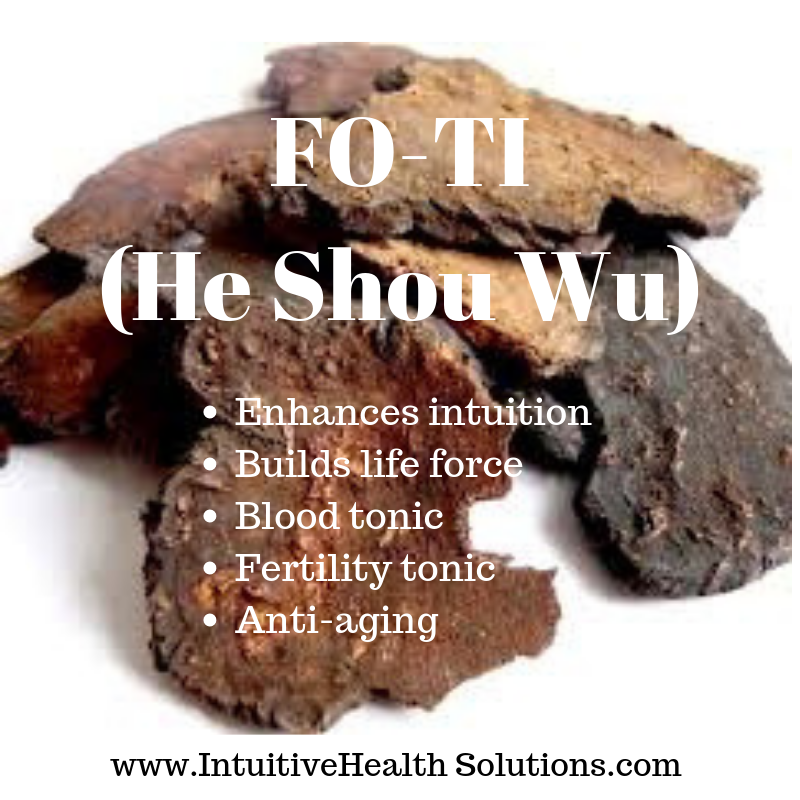
Fo-Ti (He Shou Wu / Polygonum multiflorum)
A classic kidney essence restorative known traditionally for improving hair, libido, and vitality.
Siberian Ginseng (Eleuthero)
Builds stamina and resilience without overstimulating the system.
Cordyceps Mushroom
Strengthens kidney yang, boosts lung capacity, and enhances energy.
(Note: Red ginseng is stronger and more warming; it’s not ideal for people experiencing heat symptoms like hot flashes.)
Emotional Wellness & the Kidneys
The kidneys govern much more than physical function. They are tied to:
Fear
Worry
Feeling unsafe
Burnout
Willpower
Intuition
Root chakra energy
Supporting emotional kidney health means creating safety and grounding in your life.
Powerful practices include:
Prayer or meditation
Letting go of fears and surrendering to outcomes
Journaling
Setting boundaries
Gentle self-care
Connecting with God/Creator/Spirit
Believing in Divine timing
Reducing overstimulation
Sometimes we cannot rush emotional sensitation — we must move through them.
On the other side, there is always growth.
Lifestyle Practices for Strong Kidney Energy
These simple shifts make a powerful difference — especially in winter:
Go to bed earlier (your body needs more sleep this time of year)
Turn off screens at sunset
Use candles or dim lighting in the evening
Gentle movement only (walking, yoga, stretching)
Warm meals and teas
Avoid overexertion
Practice daily stillness or meditation
Keep your lower back and kidneys warm
When you align with the season, your body does the healing for you.
Common Questions
Why do I feel more tired in winter?
Your body naturally wants more rest. Forcing yourself awake early drains Jing.
Is lemon water good or bad?
It’s beneficial — sour foods support the kidneys — but acidic on teeth. Use a straw or brush mid-day.
Chinese Medicine associates this with weakened kidney essence or lower prenatal Jing.
Simple Weekly Action Plan
Try this gentle routine to begin rebuilding your kidney energy:
Add 2–3 black or purple kidney foods daily
Turn off screens after sunset
Go to bed 30–45 minutes earlier
Drink warm teas and broths
Practice meditation or prayer nightly
Choose gentle movement only
Notice changes in sleep, energy, and mood
Small shifts create profound change when done consistently.
Final Thoughts
Your kidneys are the deep roots of your health — physically, emotionally, and energetically. When you nourish them, you rebuild your foundation for vitality, clarity, hormones, resilience, and longevity.
Winter is the sacred window for healing.
If you honor the slowness, listen inward, and nourish deeply, you will emerge into spring renewed, grounded, and carrying more energy than you’ve felt in years.
Here’s to a season of restoration, warmth, and rebuilding your life-force from the inside out.
This month we are focusing on optimizing Kidney Health and Jing in the Empowered Health Collective. If you would like to join us to learn more, healings and restoration - click here.





 This could include:
 Some simple options include:




Do you ever ...&p[url]=http://www.intuitivehealthsolutions.com/blog/detox-inflammation-whole-body-reset.htm&p[images][0]=http://www.intuitivehealthsolutions.com/resources/blog/contributors/303FAFEB-C524-525E-0E48-84A32F9849D4/cropped/t_IMG_9501.jpg "Like on Facebook")

 Focus on:
 Exercise is one of the most powerful tools for bone health.
 Your body cannot rebuild effectively when it’s stuck in stress mode.
 If you need help figuring out why your bone health may be weak connect with me for a


 Brain
Brain
 Aim for:
 Half an hour of walking a day is not enough.
 Your nervous system responds to your thoughts.
 Your body is constantly communicating with you through:
 As you move through this season, consider this approach to health:
 Listening to your body is not just a physical practice it’s a spiritual one.
 Fo-Ti (He Shou Wu / Polygonum multiflorum)